Have you ever finished a job, driven home, and done the math, only to realize you basically worked for less than minimum wage?
It happens more than people admit. And it's not because the cleaning business doesn't pay. It's because most people starting out price from fear instead of from confidence. They look at what others are charging, panic about losing the client, and go lower. Then lower again. Then they're stuck. Too cheap to be profitable, too busy to raise rates without losing everyone.
Here's the tension nobody talks about. You want clients badly enough that you'll take almost anything at the start. That's understandable. But the price you set in month one becomes the anchor for everything that follows. Raise it later and clients feel like they're being squeezed. Keep it low and you're building a business that works you into the ground.
Zoom out and this is just human psychology. People equate price with quality. A cleaning service charging $80 for a two-bedroom apartment doesn't feel like a premium service. It feels like a risk. The client wonders what corners you're cutting. Meanwhile the company charging $150 for the same job reads as serious, insured, reliable. Same mop. Different story.

Types of Cleaning Businesses
Your pricing model starts with what you're actually selling. Residential (houses, apartments, condos) is usually hourly or flat rate per job. Commercial spaces like offices and retail tend to go by square footage or monthly contract. Specialist services like post-construction cleanup, carpet cleaning, and move-out cleans command higher rates because of the skill and equipment involved. Know which lane you're in before you set a single number.
If you're still deciding which type of cleaning business to start, read our guide on how to start a cleaning business first. Getting clear on your lane makes pricing much simpler.
Is Starting a Cleaning Business Right for You?
The pricing question is really a values question. Are you building something that pays you what your time is worth, or are you building something to stay busy? Those are different businesses. The first one has a future. The second one has a ceiling.
Essential Steps to Price Your Cleaning Business
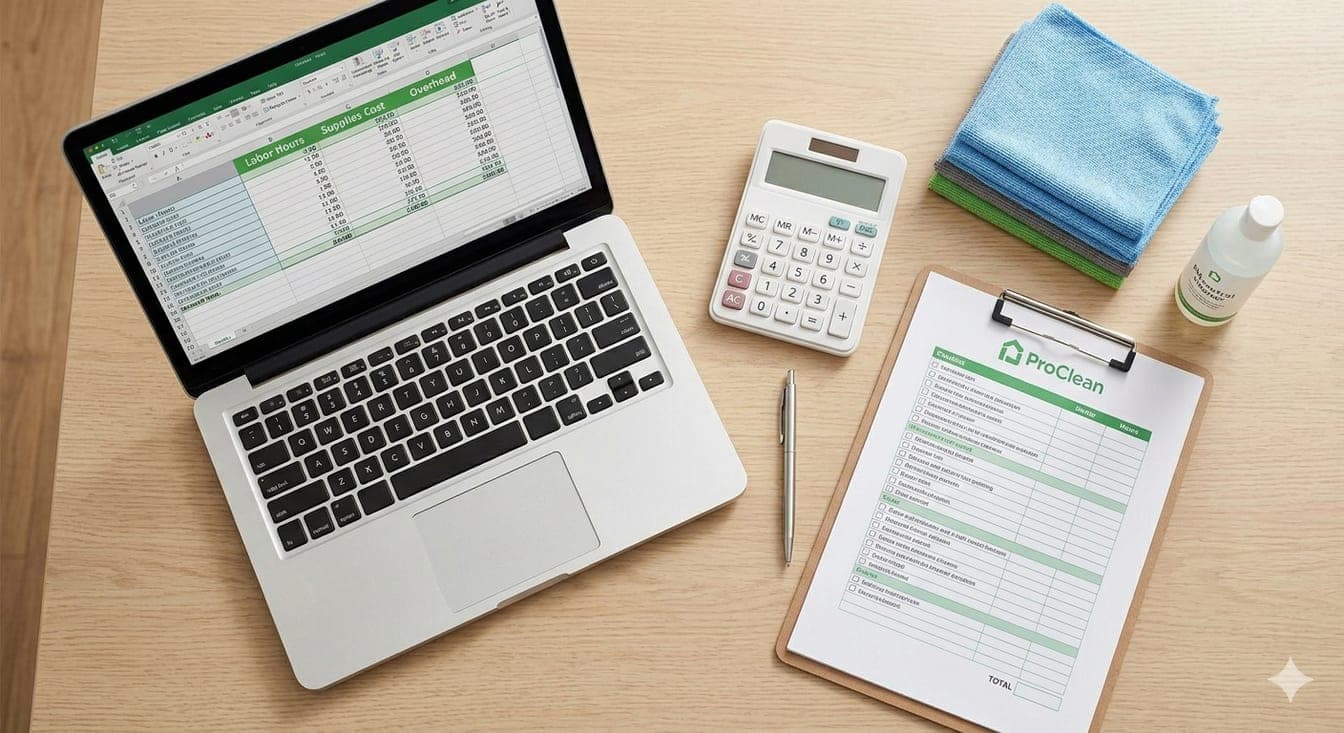
Research what competitors charge in your area first. Not to match them, but to understand the floor. Then factor in your actual costs: supplies, transportation, your time, and a margin for the unexpected. The math usually looks something like this. A two-bedroom residential clean takes two to three hours. At $35 an hour in supplies and overhead, and your time worth at least $25 an hour, you're already at $180 before profit. Price below that and you're losing.
Flat rate by job type is cleaner for clients and easier to scale. They know what they're paying upfront. No surprises. No awkward conversations about overtime. Square footage works well for commercial. It's objective and easy to defend.
One more thing. Don't compete on price. Ever. There will always be someone willing to go cheaper. That race ends badly. Compete on reliability, communication, and showing up exactly when you said you would. In a market full of flakes, that alone is worth a premium.
Managing Your Cleaning Business Finances
Raise your rates before you think you're ready. Seriously. Most people wait until they're resentful about what they're charging, and by then they've trained their clients to expect the low number. A 10–15% increase every year is reasonable. Frame it as a notice, not an apology. “Starting next month, rates will be $X.” That's it. The clients worth keeping will stay.
FAQs on Pricing a Cleaning Business
What if I lose clients when I raise rates?
You'll lose some. That's not a failure. It's a filter. The clients who leave over a $20 increase were never going to be good long-term clients anyway.
Should I charge more for first-time cleans?
Yes. A first clean almost always takes longer. Deep cleaning a neglected space is a different job than maintaining a tidy one. Charge a one-time deep clean rate upfront, then a lower recurring rate after.
How do I handle clients who want to negotiate?
Hold the line. If you need to offer something, offer a smaller scope, not a lower rate. Never discount your hourly rate. It devalues everything you do going forward.
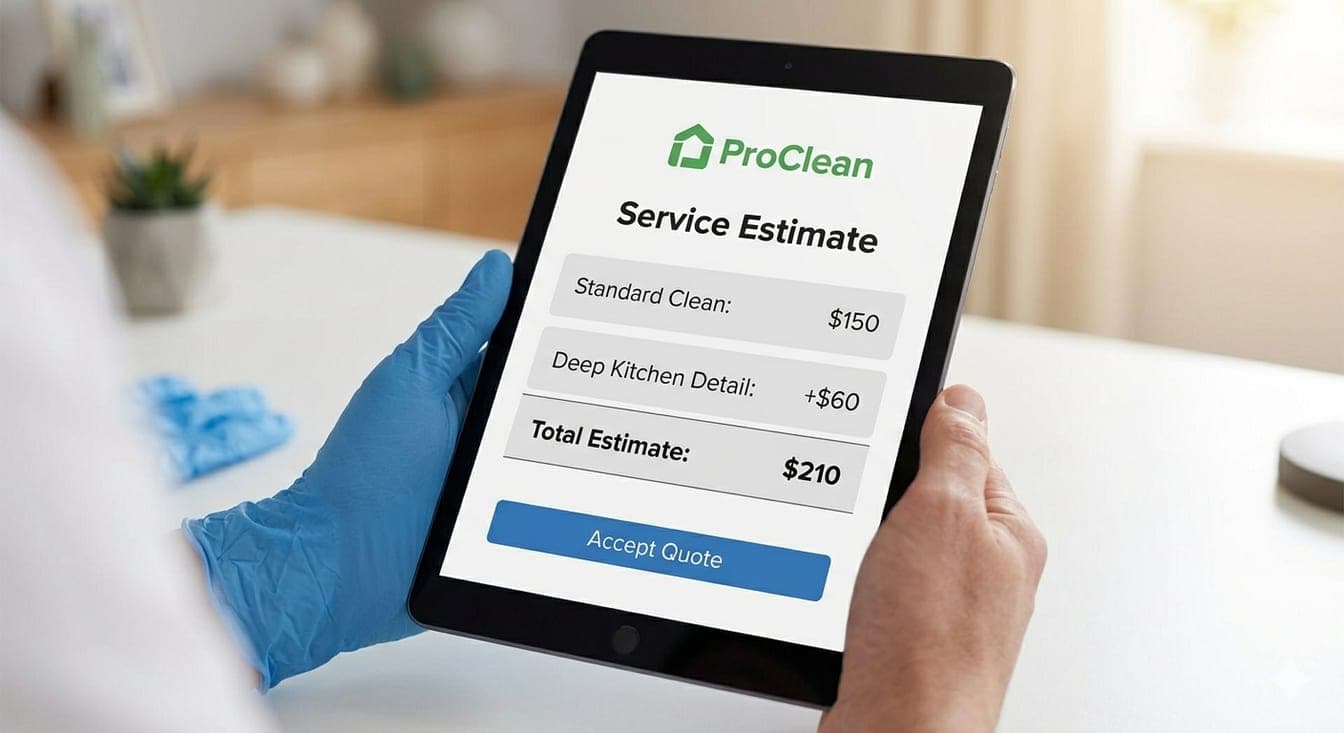
The honest reframe: undercharging feels like humility. It isn't. It's doubt wearing a polite mask. Set a rate that reflects what the work is actually worth, and then do work that's worth it.
Related reading
Pricing is only one piece of the puzzle. These guides cover the rest.
- How to Start a Cleaning Business (The Honest Version) — the full setup guide from day zero
- How to Get Your First 10 Cleaning Clients — where clients actually come from before you have a reputation